Screen printing
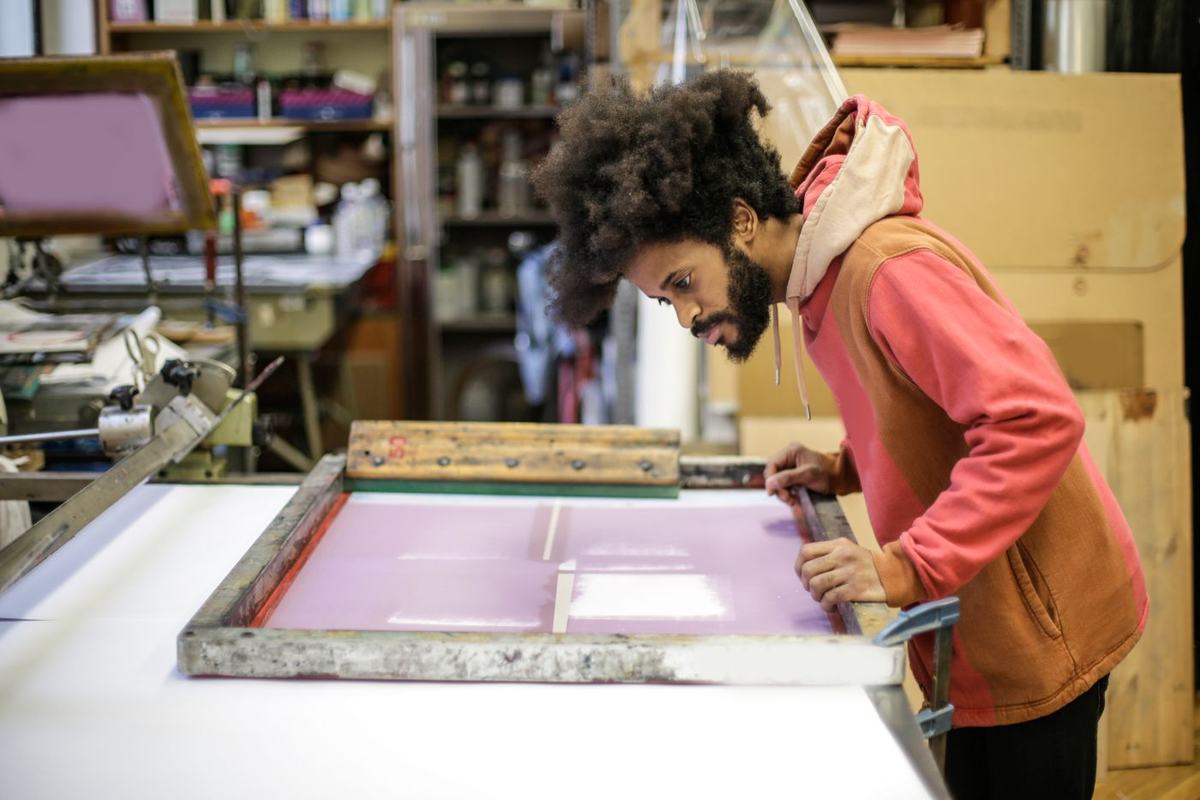
Ink is pushed through a mesh screen onto the fabric, one screen per color. Setup takes time, but once the screens are made each additional print is fast — which is why screen printing becomes economical as quantities grow.
- Best for: bold spot-color designs, larger runs, specialty inks (puff, high-density, discharge).
- Watch out for: cost rises with every added color; photographic gradients need halftones.
DTG (direct-to-garment)
An inkjet printer applies water-based ink directly to the garment. There are no screens, so full-color artwork and small quantities are easy, and each design can even be different.
- Best for: small runs, full-color or photographic artwork, samples and print-on-demand.
- Watch out for: works best on cotton-rich fabrics; dark garments need a pre-treatment and white underbase; per-piece time doesn’t fall much with volume.
Embroidery
Thread is stitched into the fabric from a digitized file. The artwork is converted into a stitch program once (digitizing), and cost is driven mainly by stitch count — so size and density matter more than the number of colors.
- Best for: logos on polos, caps, outerwear and heavy fleece; a premium, long-lasting finish.
- Watch out for: fine detail and tiny text are limited; large filled areas get stiff and can pucker lightweight fabrics.
Side-by-side comparison
| Screen print | DTG | Embroidery | |
|---|---|---|---|
| Setup | Screens per color | Minimal | Digitizing per design |
| Small runs | Less economical | Well suited | Suitable for small logos |
| Large runs | Most economical | Slower per piece | Cost follows stitch count |
| Colors | Each color adds cost | Full color | Multiple thread colors |
| Hand-feel | Ink layer on surface | Soft, in the fibres | Raised, textured |
| Fabrics | Most fabrics (ink dependent) | Best on cotton | Stable, mid–heavy fabrics |
Heat transfer and sublimation are also worth knowing: transfers suit names and numbers or technical fabrics; sublimation gives all-over full color on light-colored polyester.
How to choose
- Start with the garment: fabric and weight rule some methods in or out.
- Count the colors and check for gradients in the artwork.
- Estimate the quantity per design, not per order.
- Decide the look you want — flat, soft or raised.
- Ask for a strike-off or sample before bulk.
Many brands mix methods: a screen-printed back graphic with a small embroidered chest logo keeps cost sensible and adds a premium detail.
Not sure which decoration fits?
Send your artwork and quantities — we’ll recommend a method and prepare a strike-off.
Get a decoration quote